1/10/2016

Happy new year, happy breastfeeding


APILAM wishes you a very happy new year full of successful, happy and informed breastfeeding with the silk-screen print “Midnight feeding” by the Inuit artist Mary Okheena.

“Midnight feeding”(1991) forms part of the Telasmos museum collection, one of APILAM’s projects which seeks to collect everything which represents or is related to breastfeeding: stamps, coins, paintings, sculptures, advertizing, health pamphlets, posters, photos…

In 2015 the APILAM team updated 229 products  in e-lactancia.org, APILAM’s e-health project on the compatibility of breastfeeding with medical procedures, medicines and other products, and participated in more than 40 conferences, congresses, workshops and courses about breastfeeding for health and non-health professionals, and for mothers and fathers.

In 2015 the e-lactancia.org website received  more than 9 million consultations carried out by more than a million and half individuals.

In addition, APILAM’s pediatricians have answered via email an average of ten daily personalized consultations on the compatibility of breastfeeding with plants, diseases, medicines and other products.

In 2016 APILAM will continue to update the e-lactancia.org website, disseminating information about the goodness and beauty of breastfeeding, as well as seeking funding to ensure that our project to promote, protect and raise awareness on breastfeeding is sustainable on a long term basis.

Happy new year, happy breastfeeding and many thanks to all the individuals, associations and institutions who have supported APILAM’s project with their backing and donations.

Dr. José María Paricio Talayero

President of APILAM

--------------------------------------------------------------------------------------------------------------
We require funding in order to continue our research and dissemination. You can collaborate with the project by donating to e-lactancia.org


11/08/2015

150 updates in e-lactancia from January to October 2015

Over the last ten months, pediatricians from APILAM have been updating and revising e-lactancia.org regarding the compatibility of breastfeeding with 150 medical procedures, drugs, herbs, and other products.

Mastitis, ginseng, breast enlargement and reduction, cannabis, X- rays, rosehip oil, camphor, venlafaxine, folic acid and bone marrow donation are among the 150 entries which have been updated or added between January and October 2015 in e-lactancia.org.
 ________________________________

We need funds to continue researching and reporting the benefits and beauty of breastfeeding. You can collaborate with the project by donating to e-lactancia.org

2/04/2015

e-lactancia on your smartphone’s home screen

Many of you have asked for an e-lactancia app for your smartphone. We are delighted to tell you that we are working on it.

In the meantime, as an appetizer, this post will explain how to put an icon on your smartphone screen with direct access to e-lactancia as shown in this image

Icons to access e-lactancia

This can be achieved via different web browsers available for iPhone, iPad, Android and Windows Phone. The following simple steps explain how to do it:


With Google Chrome:


1. Enter the e-lactancia.org address into the browser’s address bar
2. Press the icon with three dots situated in the upper right corner
3. Select the option "Add to home screen" 
4. Enter a title (the text which will appear below the icon) and press “add”.


With Mozilla Firefox:
1. Enter the e-lactancia.org address into the browser’s address bar
2. Press the button with three verticle dots at the top right
3. Select the option “Pages”
4. In the new menu, select the option “Add to home screen”
5. Firefox will automatically add an icon to your screen.


With Opera Mini:

1. Enter the e-lactancia.org address into the browser’s address bar
2. Press the little star on the right of the address bar 3. In the drop down menu, select the option "Add to home screen"


Notes:
The icon which is created won’t have the beautiful e-lactancia logo :-(
The option to create direct access only works with Opera MINI. The Opera browser (the normal one, not the mini version) does not support this option at the moment.


With Safari:
1. Enter the e-lactancia.org address into the browser’s address bar
2. Press the Share button in the upper right (a little box with an arrow pointing upwards).
3. Choose the option "add direct access to home screen”
4. Enter a title (the text which will appear below the icon) and press “add”.

Note: Safari, the default browser for iPad and iPhone will create an icon featuring a “photo” of the website, instead of using our beautiful logo :-(


We hope that this brief guide will be useful and will allow you to access information in e-lactancia more easily from your mobile phones.

Written by Javier Vicente, developer of e-lactancia.org in APILAM
                        -------------x--------------------
We require funding in order to continue researching and disseminating information. You can help e-lactancia.org by making a donation


2/19/2013

Breastfeeding in infants suffering from chylothorax


This article discusses the possibility of using fat free breastmilk in the treatment of a disease fortunately rare: chylothorax.

We used an appropriate 
language 
to reduce the complexity to non-professionals without sacrificing outreach to spread among professionals (residents and specialist of Pediatrics, Neonatology and Pediatric surgery and nursing staff of neonatal and pediatric units). The discussion in the subject may be not as deep as to wake the interests in experts versed in the matter.


Definition

Chylothorax is extravasation of chylous  lymph of the lymphatic system into the pleural space.


Anatomical-physiological Remembrance
The lymphatic system is composed of numerous ducts or very fine lymphatic capillaries which converge into two thicker ducts, right or upper duct which collects lymph from the right parts of the head and trunk and right arm; and thoracic duct lymph collecting from the rest of the body. Both ducts just converge into the subclavian veins. The thoracic duct runs parallel to the superior vena cava and the aorta. In addition to carrying lymph, after meals, transports long-chain fatty acids, greatly increasing its volume to more than 5 times, depending on the amount and type of fat ingested.


Lymph is derived from a liquid blood extravasation into the interstitial tissues of the body. Most of the blood supply to the tissues through arteries and out through the capillaries to nourish and provide oxygen to the body cells back to the heart through the venous system, but some is trapped in the interstitial tissue and is collected by the lymphatic capillaries back to the heart. It is a parallel return system of support to the venous system.

Fats (most are triglycerides) that we eat are hydrolyzed (digested) by means of enzymes (lipases) and transformed into smaller pieces called fatty acids, so they can be absorbed by the intestinal cells. Lipase which makes this digestion is secreted by the pancreas. Newborns do not have a lot of pancreatic lipase, but you can find it in the saliva of the mouth and, in addition, in the mother's breastmilk, which helps digest fats.


Once digested and absorbed, if the fatty acids are not very large molecule (less than 14 carbon atoms: short and medium chain) they pass the portal vein to the liver with no further problems. If they are larger (long chain), they pass up the lymphatic system and the thoracic duct into the venous system. When the lymph is mixed with fat meals in the thoracic duct, is called chyle.
Thus the lymphatic system, in addition to draining lymph extravasated of the body, leads fats into the venous system of the intestine. The lymphatic system also has an immune function, of defense against infections and other attacks, which is not addressed here.


Etiology of chylothorax (causes)

The absence, malformation or ruptured thoracic duct causes the lymph not to drain into the venous system, making it to drain into the chest out and accumulating in the pleural space (space between the lungs and the lining of the pleura), promoting pleural effusion of chylous lymph (fat) called chylothorax that causes shortness of breath and loss of fat, protein and defenses in the body.

When the lymph carries more than 110 mg/dL of fat (triglycerides) in composition, we talk about chyle, which is a milky sap.

In the first months of life chylothorax can occur:

  1. After surgery of congenital malformations (heart disease, esophageal atresia, diaphragmatic hernia, etc..) In which the the thoracic duct is inadvertently transected (about 5% of cardiac surgery).
  2. In case of congenital malformations associated with other, chromosomal (Down's syndrome, for example) or not and in isolation (idiopathic).
  3. More uncommon, for the pipe (a catheter) in the subclavian or jugular veins, can pierce the thoracic duct.

Treatment

To relieve respiratory distress involving pleural effusion, pleural punctures are used and repeated aspirations or continuous drainage of chylothorax, with the drawback that the patient loses large amounts of fat, protein, minerals, lymphocytes and immunoglobulins (defenses) contained in that liquid. It is necessary to adequately replenish these losses.

Conservative treatments are associated (non-surgical) that essentially try to minimize or eliminate lymphatic flow through the thoracic duct and so, by keeping it in relative rest, get the spontaneous closure of the defect. They can be special diets or drug treatments.

Over 70% of patients improve with special formulas free or with low amount of long chain fatty acids and, instead, enriched with medium chain triglycerides (MCT). You can not give the usual milk formulas because tthey contain long-chain triglycerides.

Many services choose to stop breastfeeding because breast milk has about 75% fat in the form of long-chain triglycerides, whose absorption and transport overload the drainage system of the thoracic duct.


But it has proven totally successful a conservative treatment of chylothorax which consists on feeding whith defatted breast milk after centrifugation and removal of the fat layer.

It is a simple procedure available to many hospitals that can be achieved with a refrigerated centrifuge at 2 ° C at 3000 rpm for 15 minutes. It takes 1 hour to process 1 liter of milk. With fewer calories, it can be enriched with MCT and glucose. We must also add soluble vitamins.


Other conservative treatments, not without side effects are:


  1. Total parenteral nutrition (artificial feeding through a vein) accompanied by total or partial fasting.
  2. Octreotide (a drug substance similar to the hormone somatostatin) which, by reducing intestinal absorption is also another option.


The average time of introduction of normal diet are 9 days (range 3-59) so you should know if you want to keep breastfeeding through regular extraction and frozen.

The best effectiveness of the various conservative treatments is still not clear.

Given the intrathoracic situation and fineness and delicacy of the thoracic duct (in adults is less than 4 mm in diameter), reconstructive surgery is a difficult choice and reserved for when conservative treatments have failed.


Use fat-modified breastmilk during the critical period, until the duct is closed  and chylous effusion ceases and then continue with full breastmilk, get benefit from the huge anti-infective properties of breast milk as the immunoglobulin A (IgA). In addition, lactoferrin and lysozyme are unaffected by the removal of fats, in fact negligible in children usually under continuous risk of infection.

In addition, mothers feel included and valued in the treatment of his son and motivated to maintain their lactation.

Dr. José María Paricio Talayero


Acknowledgements:
To Belen Abarca Sánchis, Neonatal ICU nurse at the Hospital Gregorio Marañón (Madrid), instructor of the LLL, mother and IBCLC, who asked me and suggested the preparation of this post.
To Breastfeeding Photo Contest Marina Alta from grup Nodrissa for the images of breastfeeding.
To all the people that with their suggestions, comments and discrepancies have helped to improve the quality and to better reflect the reality of a complex situation.
Drawings of the lymphatic system: Gerhard Wolf-Heidegger. Systematischen Atlas Anatomie des Menschen. Ed S.Karger. Basel, 1961


References

Biewer ES, Zürn C, Arnold R, Glöckler M, Schulte-Mönting J, Schlensak C, Dittrich S. 
J Cardiothorac Surg. 2010 Dec 13;5:127.

Medoff-Cooper B, Naim M, Torowicz D, Mott A. 
Cardiol Young. 2010 Dec;20 Suppl 3:149-53. 

Lumbreras Fernández J, Sánchez Díaz JI. 
An Pediatr (Barc). 2009 Mar;70(3):223-9. 

Prada Arias M, Rodríguez Barca P, Carbajosa Herrero MT, de Celis Villasana L, Viñals González F. 
An Pediatr (Barc). 2008 Aug;69(2):184-5.

Copons Fernández C, Benítez Segura I, Castillo Salinas F, Salcedo Abizanda S.
Quilotórax neonatal: etiología, evolución y respuesta al tratamiento.
[Neonatal chylothorax: aetiology, clinical course and efficacy of treatment].
An Pediatr (Barc). 2008 Mar;68(3):224-31.

Chan GM, Lechtenberg E.
J Perinatol. 2007 Jul;27(7):434-6.

Roehr CC, Jung A, Curcin OA, Proquitte H, Hammer H, Wauer RR. 
Ann Thorac Surg. 2005 Nov;80(5):1981-2.

Hamdan MA, Gaeta ML. 
Ann Thorac Surg. 2004 Jun;77(6):2215-7. 

Trish Whitehouse (La Leche League):
La leche de Bobby: Amamantar a un bebé con Quilotórax

Martínez Tallo E, Hernández Rastrollo R, Agulla Rodiño E, Sanjuán Rodríguez S, Campello Escudero E. 
Quilotórax neonatal y tratamiento conservador.
.Neonatal chylothorax and conservative treatment.    
An Esp Pediatr. 2002 May;56(5):448-51.

Al-Tawil K, Ahmed G, Al-Hathal M, Al-Jarallah Y, Campbell N. 
Am J Perinatol. 2000;17(3):121-6.

Yamamoto T, Koeda T, Tamura A, Sawada H, Nagata I, Nagata N, Ito T, Mio Y.
Acta Paediatr Jpn. 1996 Dec;38(6):689-91.


2/16/2013

Depression, antidepressants, anxiolytics and breastfeeding

Maternal depression, especially postpartum –which for some authors is the one that may happend in the first month after birth but, due to the difficulty of clearly recongnize it is admitted to happend up to the first 6 months-, is a relatively common disorder that can affect 10-15% of women who have given birth and especially if they are teenagers. Thyroid disorders can mimic depression, so the doctor usually tries to assess the the thyroid function with tests before diagnosing depression.

Depressed mood is very destructive and distressing for the person and is amplified by all the life changes that happen to women after giving birth. When untreated, it can be devastating for her, her child, her immediate family and for attachment and subsequent mother-child relationships. If the desire of the woman is brearsfeeding, it is counterproductive removing it arguing depression as an excuse: frustration, feelings of guilt and low self-esteem, very strong in a depression, will only increase.

Some non-drug psychotherapeutic treatments such as interpersonal therapy can be effective to treat depression.

Most antidepressants are effective in treating depression, be it postpartum or not. They are indicated in moderate and severe depression when no improvement is achieved with psychotherapy. Do not be afraid to use this medication even if the mother is breastfeeding since the vast majority of antidepressants are fully compatible with breastfeeding as also some anxiolytics are. There are more than enough published scientific papers that prove it.

This is due to the fact that, in general, there is no passing at all or passing of negligible quantities of these substances to milk and, thus, do not affect the infant. Some of them may also increase milk production.

Paroxetine and sertraline are the safest and the most reported ones in scientific literature, but either member of the antidepressants family (inhibitors of serotonin reuptake) are very safe: Citalopram, Escitalopram, Duloxetine, Fluoxetine and Fluvoxamine. Similarly, antidepressants from other pharmacological families such as venlafaxine, moclobemide, amitriptyline, amoxapine, clomipramine, imipramine and nortriptyline are compatible with breastfeeding.

To complement the treatment of depression, anxiolytics drugs are also used to reduce the depression anxiety symptoms. These are drugs belonging to the benzodiazepine family like diazepam or Valium. They have the problem that can give drowsiness and, going into breast milk, lull the infant. Hence, during the breastfeeding is best to use the drug known to pass to the milk in less proportion and not exceed the prescribed dose. The adviced anxiolytic with published experience use in nursing mothers is Lorazepam.

You and your doctor can check the updated literature references by clicking on the literatura associated to each product in the website www.e-lactancia.org.

If in doubt when your doctor prescribes something, you can ask in inquiries@apilam.org.


Dr. JM Paricio Talayero, pediatrician, Breastfeeding Committee of the Spanish Association of Pediatrics.

2/06/2013

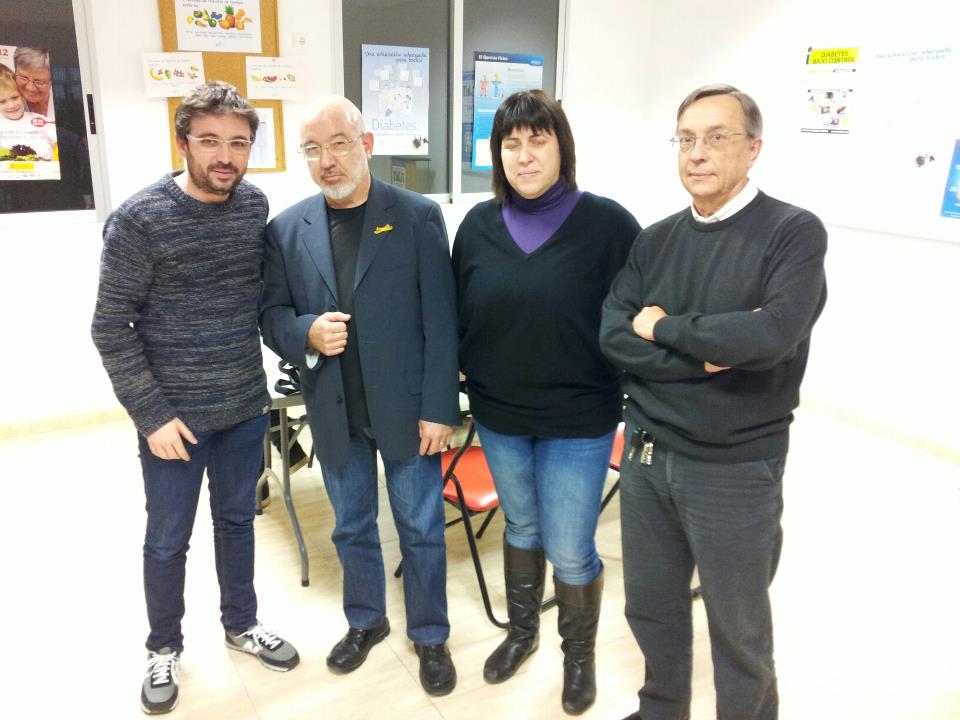
The president of Apilam in the Spanish TV show Salvados


On Sunday February 10 at 21.30 LaSexta Television will be broadcast on a new program of Salvados hich will address the consequences of the privatization of the public health in Spain.


On Sunday February 10 at 21.30 in LaSexta, Salvados discuss the privatization of Spanish Health.

This fact, in itself sufficient to speak of it in this blog for its impact, becomes more important when one is interviewed by Jordi Évole is Dr. José María Paricio, president of APILAM and former head of Pediatrics at Hospital de Denia Marina Alta, one of the privatized departments by the Valencian Agency of Health.


We take this news to announce that we have been working for months preparing our website at APILAM.org

We open portal! Be sure to visit it at apilam.org

On our website you can learn the upcoming talks, workshops, courses and events that will take place. You can learn the training courses we teach, read monographs that answer common questions related with breastfeeding, access to our sites and apps about medical prescription compatibility with breastfeeding drugs and more.

You'll have access to our web resources about breastfeeding and drug compatibility and monographs on our FAQ section.
The content of the website (and appearance, in some cases) will be updated every day. We also want to be a channel of communication with mothers and professionals, so we have enabled e-mails so you can contact our clinicians.

You can see our upcoming events and follow us through the major social networks.


Get to know the courses and workshops we teach.


We hope you like both Salvados and our portal!

Author: Javier Vicente - PhD in computer engineering. APILAM member and developer of apilam.org and LACTATION.

1/29/2013

Breastfeeding in the world today


It is the first child of Louise and Peter. Finally the longed day came and the little Damian is healthy and strong. His parents did their part to make a quiet delivery, but mostly without intervention, to allow nature to fulfill his part. They had read that if you put sera, epidural anesthesia and stuff, your project could go to ruin and the risk of ending in cesarean was higher. Then, breastfeeding may be difficult, it could be more difficult for the child to attach to the breast and milk production would be lower. But this time they were lucky and this did not happen.


In recent decades, the modern vision of a world with incredible technological advances has been minimizing the traditional concept of a natural diet as the basis for maintaining good health. In our environment, some have called for a return to the Mediterranean diet, for some now in decline.

With regard to infant feeding, we often hear that breastfeeding is best, regardless that this statement implies the tacit acceptance that the other option or artificial feeding, is worse. Medical societies have kept ambiguous positions on the matter. Forums are full of complaints from parents by the contradictions in which we doctors incur and the ease with which we prescribe infant formula at the slightest difficulty when it comes to breastfeeding. In our defense we say that we passed through the halls of medicine reiving no training at all on breastfeeding.

This situation, however, may change after the publication by the American Academy of Pediatrics, something like the summit of pediatric knowledge and respected by pediatricians all over the world, a declaration which recognizes breastfeeding as the gold standard child nutrition. This statement marks a milestone, because for the first time is the result of consensus of all the committees of specialties dependent on the Academy and recognizes the importance of breastfeeding from the point of view of public health for the bad consequences for child health in developed and developing countries when children are fed with infant formula.


This initiative was the result of a comprehensive assessment of the available scientific evidence. The Spanish Mediterranean region of Marina Alta is honored to have contributed to a study published in the journal Pediatrics in 2006, conducted by Dr. Paricio Talayero of Pediatrics Service from the old hospital of La Pedrera, which showed among other things, that the risk of hospitalization due to infection was 7 times higher among non-breastfed children compared with those who were breastfed for 1 year.

Why then do we often opt for the worst? The current recommendation is exclusive breastfeeding for the first 6 months and then continue it with complementary foods until the child is weaned itself. In practice we see that most children start weaning early, many receive aid from maternity milks and more than 70% longer breastfed at 4 months of life. Multiple causes affect this result, but by far the most important is the absence of a value system in society that foster and provide support to the mother who wants to breastfeed. There are many missed opportunities both in health and social fields, in which breastfeeding is lost for the lack of support or adequate advice.

Aware of these shortcomings, there are groups of professionals interested in remedying this situation. The LM Committee of the Spanish Association of Pediatrics, support groups led by midwives, nurses and related professionals working to promote breastfeeding. A few months ago APILAM was created by a group of professionals from various disciplines, as a non-profit association for the support, promotion and research of breastfeeding. It is responsible for managing the page on medications and breastfeeding www.e-lactancia.org,  highly valued for years by providing free information on breastfeeding support over 1,600 pharmaceuticals, natural and diseases and will provide training courses for professionals and support groups on breastfeeding.

A few weeks ago in Madrid delegations from several countries met to discuss the issue of early abandonment of breastfeeding to develop an agenda with strategies for each country. In the case of Spain was reflected in several surveys the little information of the population and lack of commitment of the professionals. The result was the commitment request to the Ministry of Health, Social Services and Equality for the creation of a National Breastfeeding Committee to coordinate in the Autonomous Community the training and promotion, granting of benefits to companies that create spaces and facilities for working mothers who want to breastfeed their children and include in their advertising messages to improve the image of breastfeeding in public places and, of course, the inclusion of theoretical an practical contents about breastfeeding in the training of medical and health professionals.

Returning to the story of the son of Louise and Peter, their fate was huge because they found a support group in their community run by a very enterprising midwife who led them and knew to remove the doubts that were appearing in the course of the breastfeeding of little Damian.

Author: Leonardo Landa Rivera - Pediatrician. APILAM member. Member of Breastfeeding Committee of the Spanish Association of Pediatrics.
Related Posts Plugin for WordPress, Blogger...